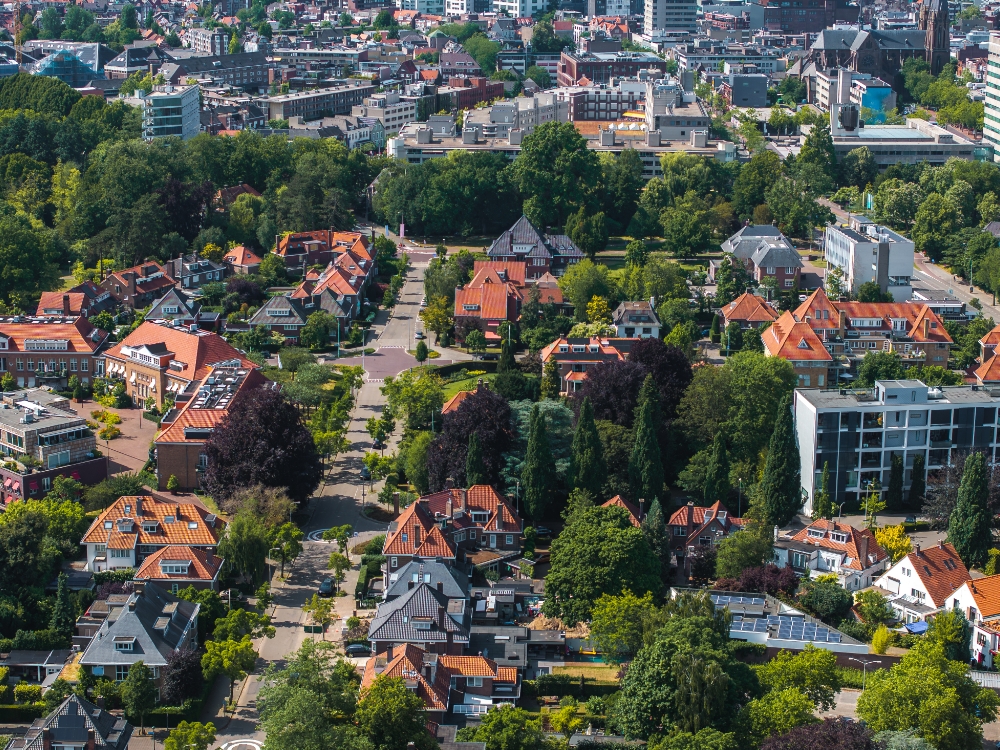
Eindhoven – positive energy district

The Eindhoven pilot shows how trusted data can accelerate the energy transition at neighbourhood level. By connecting energy, housing, and liveability data, the city lays the foundation for positive energy districts that support sustainable growth and inclusive urban development.

City data sharing

Trusted city data sharing

real cities

Proven in real cities

data framework

Reusable data framework

Overview

The Eindhoven use case focuses on the development of a Positive Energy District (PED), where neighbourhoods generate more energy than they consume. By creating a local data space, the pilot brings together energy, housing, liveability, and social data to support sustainable urban development and the energy transition. The use case builds on existing municipal data platforms and aims to embed data-driven decision-making within the daily work of the city.

Objectives

The main objective is to support the development of 40,000 new homes by 2040 while meeting ambitious energy transition targets. The pilot aims to improve insight into energy performance at neighbourhood level, support the transition from natural gas to renewable energy, and strengthen collaboration between municipal departments, housing corporations, businesses, and citizens.

Approach

The Eindhoven pilot integrates new energy data services into existing municipal platforms, including housing and neighbourhood monitoring tools. These services combine energy data with liveability and social resilience indicators, enabling cross-departmental use and long-term embedding within the municipal organisation. The approach follows the DS4SSCC blueprint and maturity model, ensuring interoperability, governance alignment, and scalability.

City data sharing

Trusted city data sharing

real cities

Proven in real cities

data framework

Reusable data framework

Expected Impact

The use case supports more informed urban planning, accelerates the energy transition, and increases transparency for citizens and stakeholders. By linking energy data with social and liveability insights, the pilot contributes to more inclusive and resilient neighbourhoods. At a broader level, the approach supports regional and national scaling through collaboration with other cities. This use case also serves as a reference for other European cities seeking to combine energy, housing, and liveability data within a trusted data space.

Eindhoven Partners

Fontys
Gemeente Eindhoven
TU/e
DATUA

Partners

Municipality of Eindhoven, housing corporations, regional partners, knowledge institutes, and technology providers, building on experience from earlier EU projects such as Triangulum. The lessons learned from this pilot can support other cities facing similar challenges and contribute to wider adoption of trusted data spaces within the DS4SSCC framework.

Contact us

Interested in applying trusted data sharing in your city or region?

CitizenCity works with public authorities, partners and innovators to turn data into practical urban solutions. Get in touch to discuss use cases, collaboration opportunities and what implementation could look like in your context.