Over the past months, CitizenCity has brought together representatives from public authorities, industry, research, education and other sectors to explore the opportunities and challenges surrounding data spaces for cities and communities.
As part of the European Data Space for Smart Communities initiative, CitizenCity contributed to three webinars addressing different aspects of data spaces:
The sessions explored how data spaces can create value, how legal and compliance requirements can be addressed through design, and what cities have learned from applying data space approaches in practice.
If you attended one or more of these webinars, we invite you to share your experience through our short questionnaire. We would like to understand how the sessions contributed to your knowledge of data spaces, whether they offered new perspectives on data-driven urban services, and whether you see potential for adopting a data space way of working.
Your feedback will help us assess the value and impact of the webinar series and improve future CitizenCity activities.
The questionnaire takes approximately 3–5 minutes to complete: https://forms.gle/vU97bBUAn7U4XEQ4A
Should you have any questions or concerns, please contact us at citizencityeu@gmail.com.
CitizenCity successfully hosted its first webinar, bringing together a diverse group of participants from over 10 countries. As part of the European Data Space for Smart Cities and Communities, the session gathered stakeholders from cities, research institutions, and innovation labs to address a central challenge: how to better engage stakeholders and create the right conditions for active participation in data spaces.
The discussion made one thing clear—stakeholder engagement does not happen automatically. Across all perspectives, participants emphasized that effective participation depends on three critical elements: trust, clear value, and a shared understanding of roles and responsibilities. While the potential of data spaces is widely recognized, aligning these factors remains a significant challenge.
A key takeaway from the session was that lack of trust and difficulties in meaningful engagement continue to be among the biggest barriers to stakeholder involvement. Addressing this complexity is at the core of CitizenCity’s approach.
Through its Stakeholder Engagement Model, CitizenCity aims to bridge this gap by fostering alignment among participants, strengthening trust, and ensuring that engagement delivers tangible value for all stakeholders involved.
The webinar marked an important first step in building a collaborative community around data spaces, with more workshops and activities planned in the coming months.
For those who registered—or would like to revisit the discussion—the webinar materials are now available:
CitizenCity thanks all participants for their valuable contributions and looks forward to continuing the conversation!
If you have any questions or would like to learn more about CitizenCity, please get in touch!
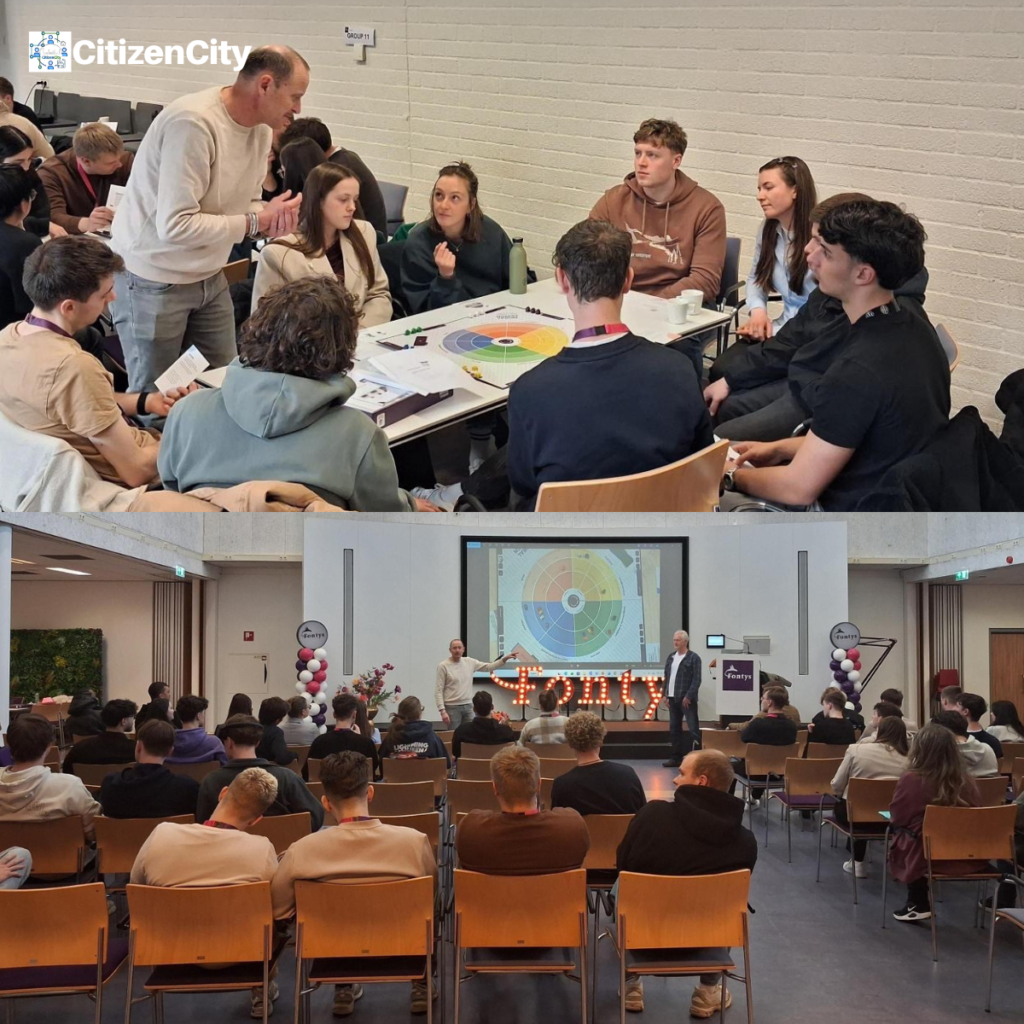
CitizenCity has been at the heart of the Multidisciplinary International Project 2026, as 90 students from 10 partner universities gathered at Fontys ICT to take part in the International Student Challenge. The initiative brought together diverse academic backgrounds to explore the potential of Data & AI in addressing real-world urban challenges.
From the outset, the challenge positioned CitizenCity—one of the pilot projects within the European Data Space for Smart Communities—as a key example of how data spaces can enable smarter, more connected cities. Students were invited to work directly with real-world use cases, diving into the role of data sharing, collaboration, and innovation in urban environments.
Over five intensive days, participants engaged in hands-on sessions and collaborative workshops. Bart Van Gennipintroduced the fundamentals of data spaces, using CitizenCity as a source of inspiration. Dujuan Yang highlighted the importance of stakeholder perspectives in shaping effective and inclusive data ecosystems.
Students also explored what it means to become a truly data-driven city, with insights and real-world examples shared by Albert Seubers in collaboration with Gemeente Eindhoven. An ethics workshop led by Maria Amalia Camara encouraged participants to reflect on the responsible use of data and AI in urban innovation.
Throughout the challenge, teams worked intensively to ideate, test, and refine solutions aimed at improving city life. The event culminated in a final showcase of innovative concepts, where creativity, teamwork, and real-world applicability were key.
The winning project addressed the central question: “How Can We Improve a City Using AI and Data?”, demonstrating both originality and practical impact.
This initiative highlights CitizenCity’s commitment to co-creating innovation with the next generation. By combining cross-disciplinary teamwork, hands-on learning, and ethical reflection, the International Student Challenge showcased how young talent can contribute to shaping smarter and more sustainable cities.
CitizenCity is inviting stakeholders, innovators, and city enthusiasts to explore how data can be transformed into real social and business value during an upcoming live webinar.
As part of the European Data Space for Smart Communities, the CitizenCity pilot project will showcase how smart data use can drive tangible impact across cities and regions. The session will feature real-world use cases from Eindhoven, Oulu, and Álava, demonstrating how data-driven approaches are improving urban life and enabling new business opportunities.
The webinar will bring together key experts behind these initiatives, including Mieke van Schaik, María Suberbiola Castillo, and Bige Tunçer. The discussion will be moderated by Dujuan Yang.
Scheduled for 17 April 2026 from 11:00 to 12:00 CET, the online session offers participants an opportunity to gain insights into how cities can leverage data, experimentation, and collaboration to create meaningful impact.
Interested participants are encouraged to register in advance to secure their place.
📅 17 April 2026
⏰ 11–12am CET
📍 Online
👉 Register now to secure your spot! https://lnkd.in/ghe82h7X
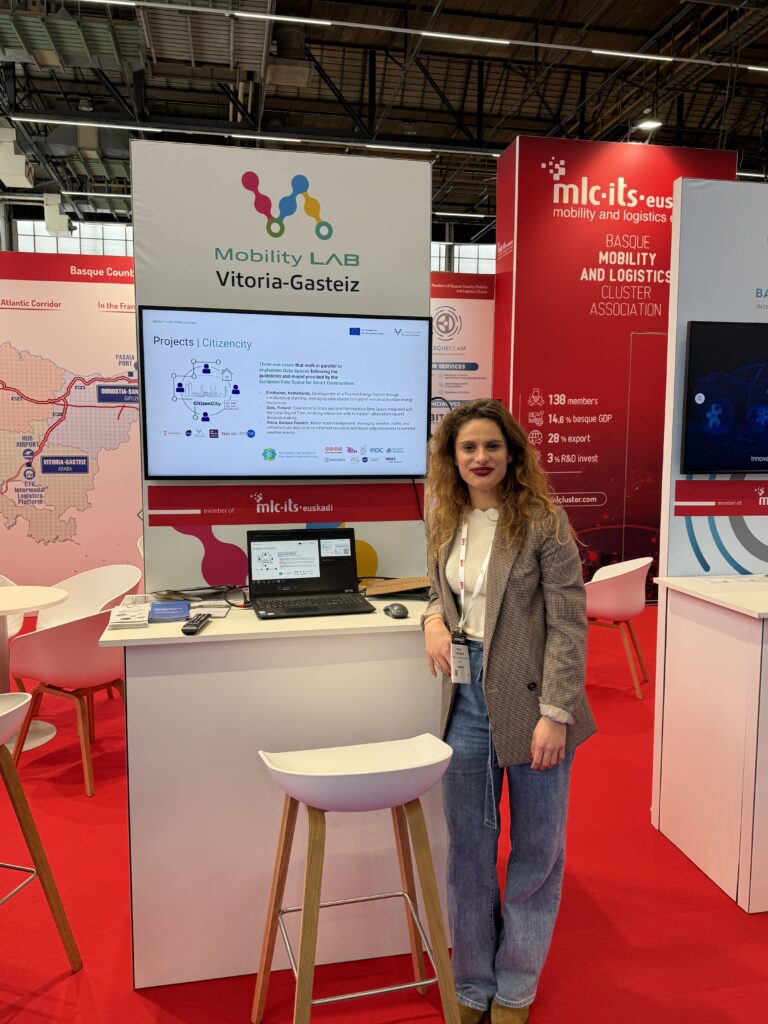
It is a busy and impactful week for CitizenCity and Mobility LAB Vitoria-Gasteiz, as partners participate in two major international mobility events, contributing to discussions on how cities can innovate through data, experimentation, and collaboration.
At the eMobility Expo World Congress & MOW in Málaga, Spain, Iñigo Bilbao Ubillos, General Director of Mobility LAB Vitoria-Gasteiz, will take part in several roundtable sessions on 10 March. These discussions will focus on advancing sustainable mobility solutions and fostering innovation across urban environments.
The event also brings exciting recognition: the project “Mobility Lab Vitoria-Gasteiz: Sandbox and Federated Data Space for Sustainable Mobility and Logistics” has been selected as a finalist in the eMobility Innovation Awards 2026, under the category Best Innovative Project for the Future of Mobility.
Meanwhile, at Intertraffic Amsterdam in the Netherlands, María Suberbiola Castillo will represent the initiative with a full agenda of activities. On 10 March, she will participate in the POLIS–OMF–EIT workshop on building civic innovation capacity and exploring emerging city mobility data use cases. Later that day, she will present Mobility LAB and CitizenCity at the shared Basque Country stand.
Her participation continues on 11 March with a speaker session at ITS Nationals, where further insights into smart mobility and collaborative innovation will be shared.
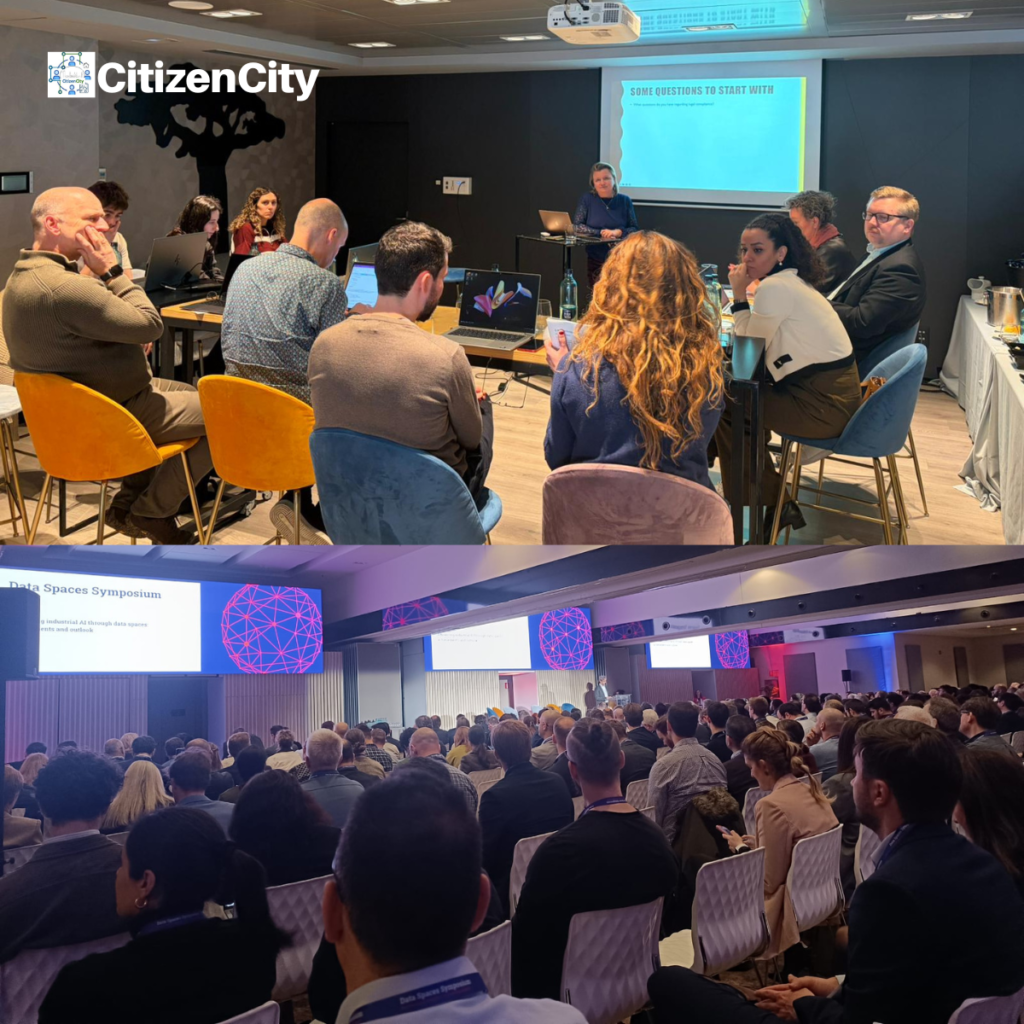
On 10 and 11 February, CitizenCity had the great opportunity to attend the the world’s leading gathering dedicated to data spaces, bringing together leaders, innovators, and organisations shaping a more connected and competitive data-driven economy.
For CitizenCity, this year symposium marked an important shift in the conversation around data spaces. The discussions made one thing very clear: we are moving beyond experimentation. Across Europe, data spaces are becoming strategic infrastructure – essential for competitiveness and innovation.
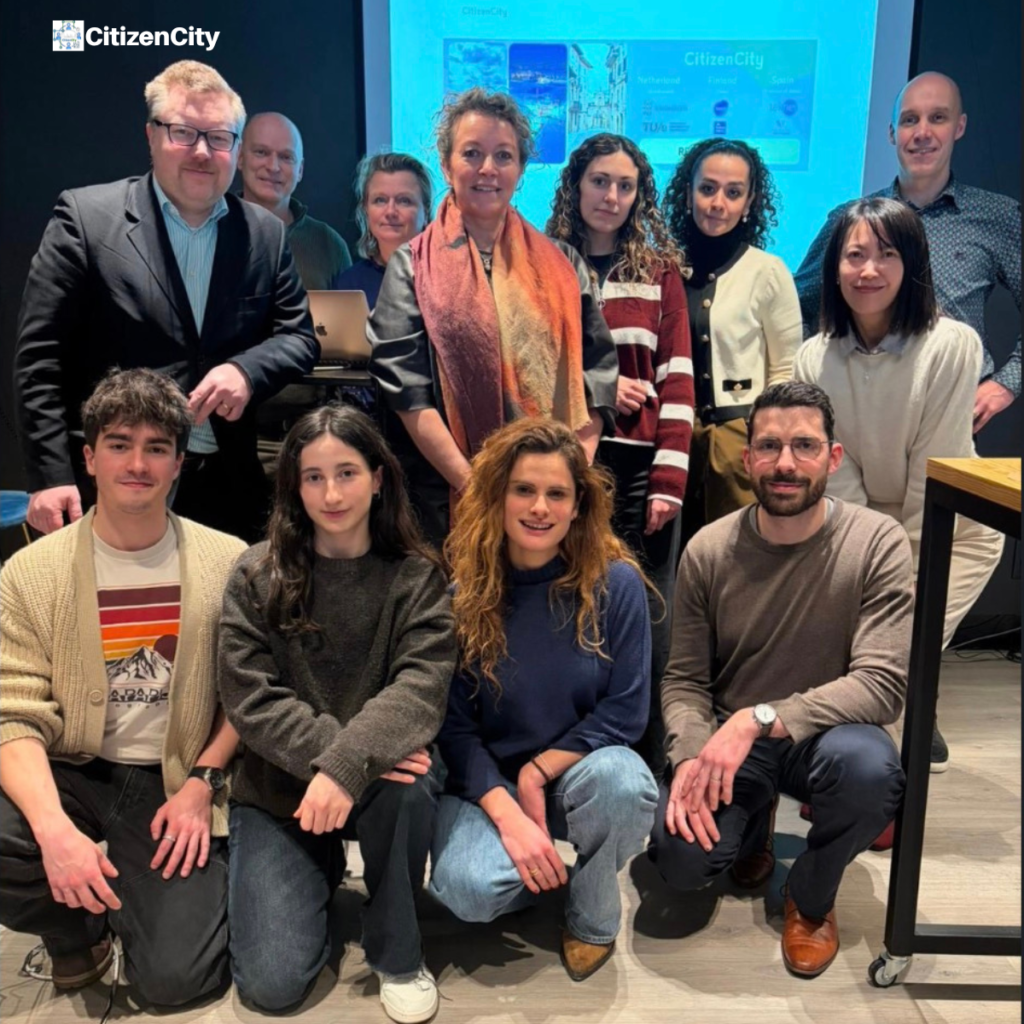
As a pilot within the European Data Space for Smart Communities, CitizenCity used the opportunity not only to learn from the broader ecosystem, but also to reflect internally. During a focused working session with our partners from Eindhoven, Oulu and Alava, we aligned on how to strengthen the foundations of trusted data sharing in our three use cases.
We deepened our work on value assessment – how to clearly demonstrate the real impact generated through data spaces. We explored governance and legal frameworks as enablers of interoperability and trust. We also discussed pathways for business development and long-term sustainability, because scaling requires more than technology – it requires viable models and shared commitment.
🔑 The key takeaway from the symposium?
𝗗𝗮𝘁𝗮 𝘀𝗽𝗮𝗰𝗲𝘀 𝗮𝗿𝗲 𝗾𝘂𝗶𝗰𝗸𝗹𝘆 𝗯𝗲𝗰𝗼𝗺𝗶𝗻𝗴 𝗮 𝗰𝗼𝗿𝗲 𝗿𝗲𝗾𝘂𝗶𝗿𝗲𝗺𝗲𝗻𝘁 𝗳𝗼𝗿 𝗿𝗲𝗴𝗶𝗼𝗻𝘀 𝗮𝗻𝗱 𝗶𝗻𝗱𝘂𝘀𝘁𝗿𝗶𝗲𝘀 𝘁𝗵𝗮𝘁 𝘄𝗮𝗻𝘁 𝘁𝗼 𝘀𝘁𝗮𝘆 𝗰𝗼𝗺𝗽𝗲𝘁𝗶𝘁𝗶𝘃𝗲. 𝗜𝗻𝘁𝗲𝗿𝗼𝗽𝗲𝗿𝗮𝗯𝗶𝗹𝗶𝘁𝘆, 𝘁𝗿𝘂𝘀𝘁 𝗮𝗻𝗱 𝗰𝗼𝗹𝗹𝗮𝗯𝗼𝗿𝗮𝘁𝗶𝗼𝗻 𝗮𝗿𝗲 𝗻𝗼 𝗹𝗼𝗻𝗴𝗲𝗿 𝗼𝗽𝘁𝗶𝗼𝗻𝗮𝗹 – 𝘁𝗵𝗲𝘆 𝗮𝗿𝗲 𝘀𝘁𝗿𝗮𝘁𝗲𝗴𝗶𝗰 𝗽𝗿𝗶𝗼𝗿𝗶𝘁𝗶𝗲𝘀!
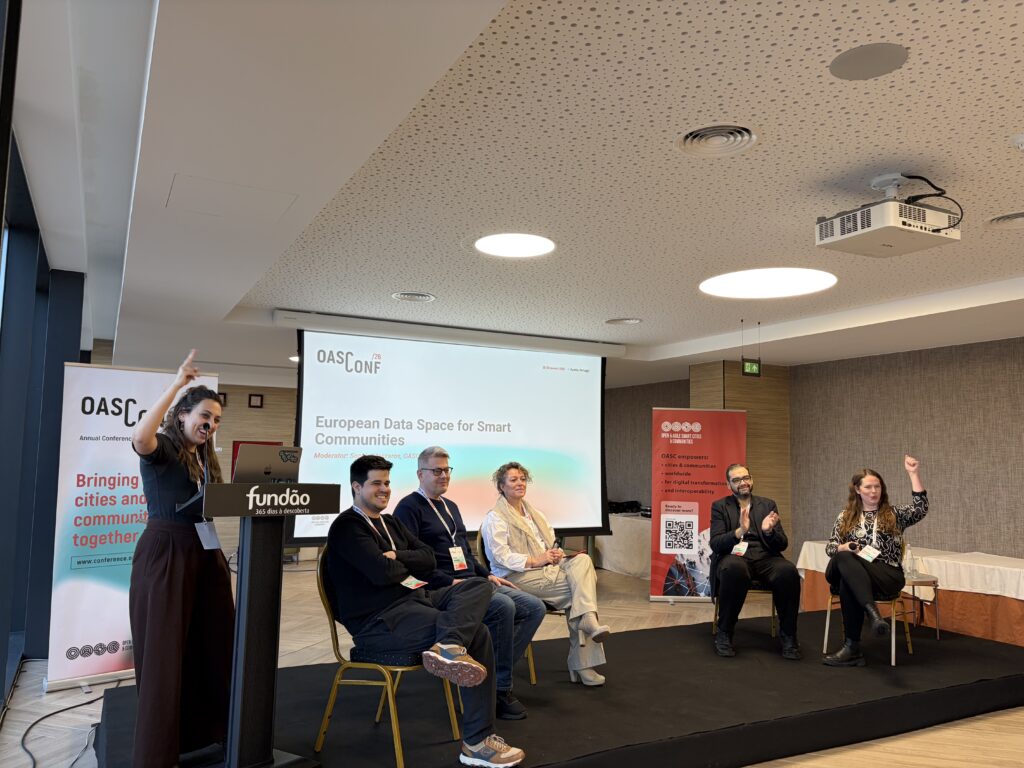
On 28 and 29 January, CitizenCity attended the OASC Conference 2026. Mieke van Schaik joined the panel “Cross-sector data spaces for the smart communities of tomorrow” to share CitizenCity’s progress and key learnings. The session highlighted how pioneering cities and pilot initiatives like CitizenCity are building Europe’s first local smart city data spaces, tackling real-world challenges and shaping smarter, more connected communities.
The session brought together cities and initiatives shaping Europe’s first local smart city data spaces, laying the groundwork for a future European Data Space for Smart Communities. From urban planning and water management to tackling urban heat islands, the session showcased how cross-sector data sharing is already transforming cities while openly discussing the legal, technical, and organisational challenges involved.
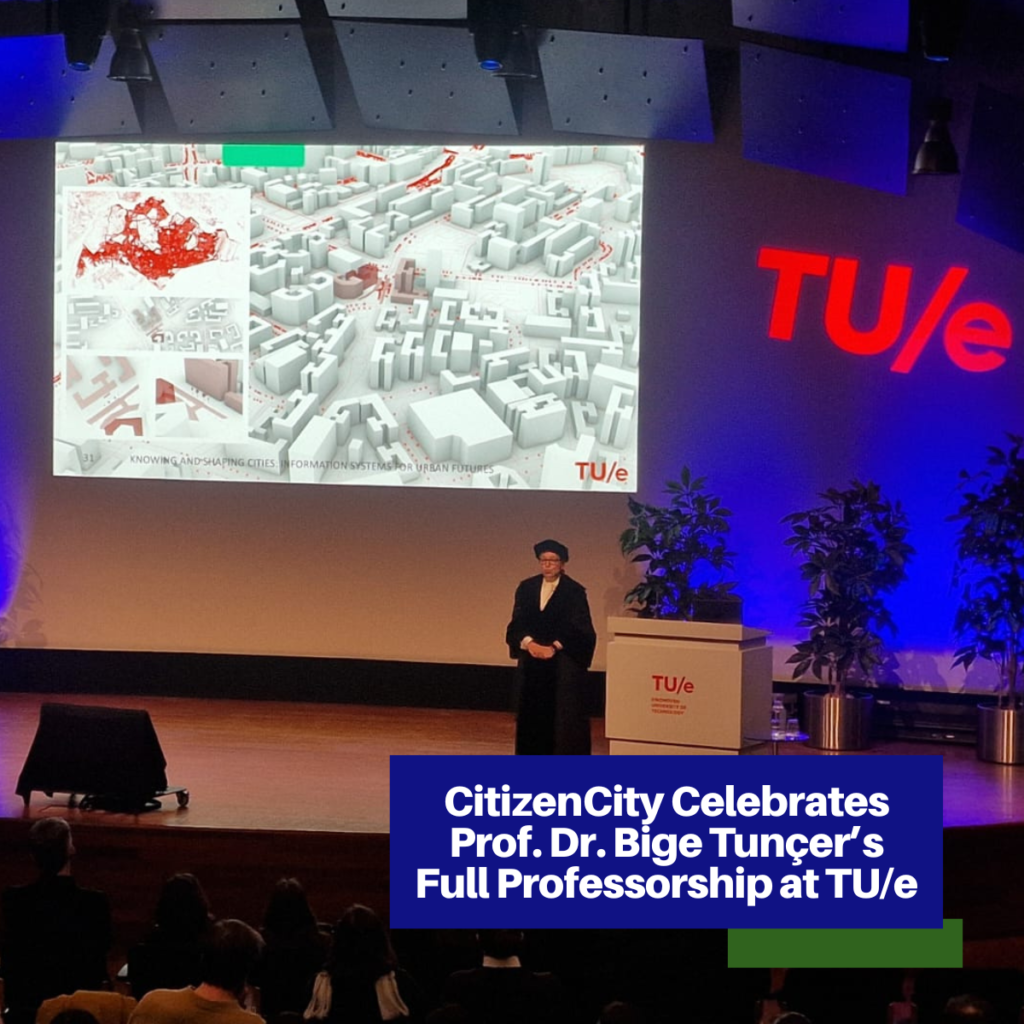
We are proud to announce that Prof. Dr. Bige Tunçer, a valued partner in the CitizenCity consortium, has been appointed Full Professor of Information Systems in the Built Environment at TU/e (Eindhoven University of Technology) as of January 15, 2024.
Her research, “Knowing and Shaping Cities: Information Systems for Urban Futures,” explores how data, algorithms, and connected systems shape the social, spatial, and ecological fabric of cities. It integrates human and non-human behavior, environmental sensing, and predictive tools to support more informed urban decision-making.
Her appointment is a major boost for CitizenCity, strengthening our ability to create cities that are resilient, responsive, and designed with citizens at the center.
Last week, Mobility LAB Vitoria-Gasteiz, one of the CitizenCity use cases, hosted the conference “Data to boost intermodal logistics and urban distribution”. The event brought together public authorities, companies, and technology providers to explore how data spaces can support more efficient and sustainable intermodal logistics and urban distribution.
The conference also marked an important milestone for the Mobility Lab data space, with the incorporation of the first 20 organisations into the ecosystem. This step reflects the growing interest among regional actors in trusted data sharing and collaborative digital infrastructures.
During the event, the Ministry for Digital Transformation and Public Administration presented national support measures for organisations connecting to data spaces. These include financial incentives available through the Data Spaces Kit, aimed at lowering barriers for public and private actors wishing to participate in data-driven ecosystems.
For CitizenCity, the Alava use case clearly demonstrates how regional initiatives can align with and contribute to the development of European Data Spaces, fostering trusted data exchange and collaboration across sectors, and supporting smarter, more connected communities.
On 26 January 2026, 30 bachelor’s and master’s IT students presented the results of six months of hands-on development work at the Innovations Insights conference, held at the ICT InnovationLab in Eindhoven. They presented their final outcome focusing on strengthening the technical foundations of the CitizenCity project by developing and testing a dedicated sandbox supporting the project’s three use cases.
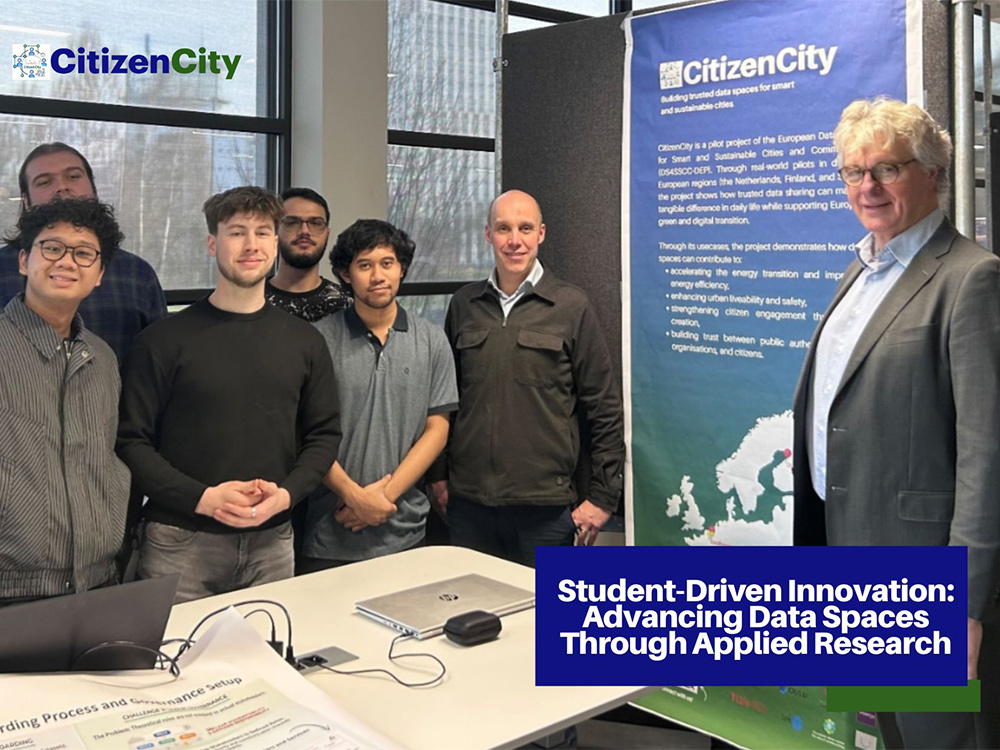
Throughout the project, the students worked hands-on with core Data Spaces building blocks, translating high-level concepts into practical solutions. Their work addressed not only technical interoperability and data exchange, but also key aspects related to cybersecurity, trust, and compliance with digital legal frameworks, elements that are essential for secure and lawful data sharing in smart communities.
Moving forward, the CitizenCity project will build on these results in upcoming applied research and development activities, supporting the innovation within European Data Spaces for Smart Communities.
On 16 and 17 September, CitizenCity attended the Pilots’ Bootcamp in Slovenia where the delegations from all 11 pilot projects came together in Ljubljana, Slovenia for an intensive, hands-on learning experience to advance both the technical and strategic dimensions of their work.
From interoperability and federation design to governance, business models, and stakeholder alignment, the Bootcamp was a space for collaboration and exchange aiming to build the federated European data space for smart communities.
During Day 1 groups worked together to refine data products, business models, and governance, building directly on their own work. On the technical side, pilots explored the latest updates to the DS4SSCC-DEP blueprint, learned how to implement ODRL policies, and saw how Verifiable Credentials can create trust in data spaces.
Day 2 was all about looking beyond individual pilots and exploring how local initiatives can connect into a shared European data space. Pilots then worked in groups to design joint approaches for sustainability and explore how to share value, costs, and responsibilities in ways that can last beyond EU funding.
On the technical side, pilots looked at tools and frameworks that make interoperability possible and help communities exchange data securely and effectively. The day wrapped up with federation pitches- pilots presenting bold ideas for collaboration, followed by feedback and reflection.
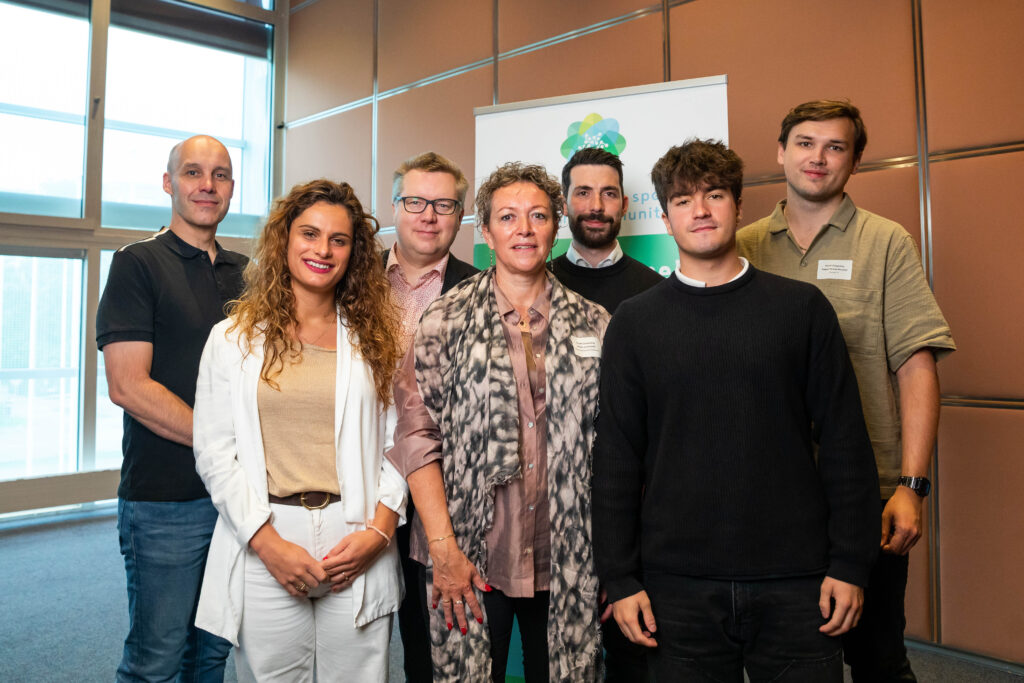
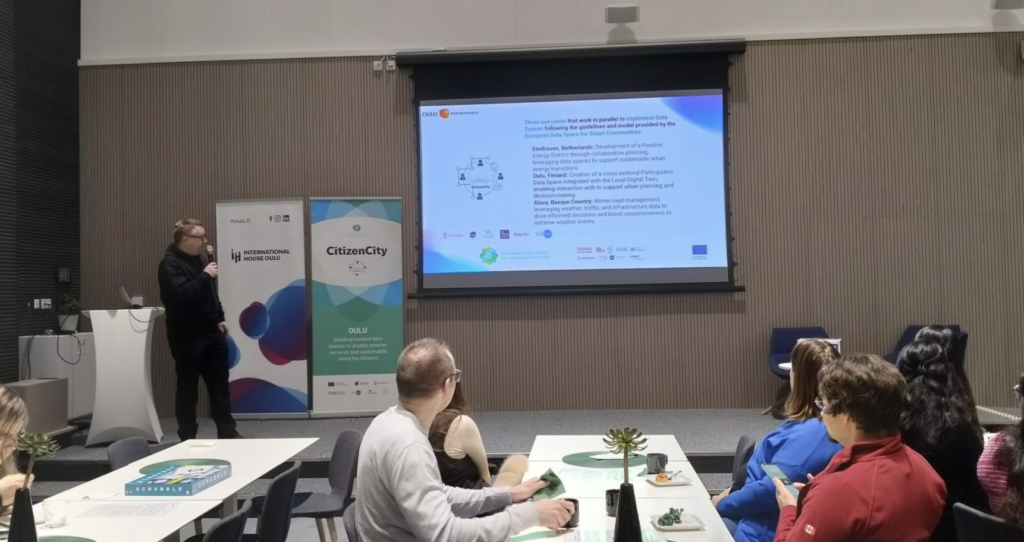
During an event organized by International House Oulu, Ari Saine and Golriz Ghonouei from BusinessOulu presented the CitizenCity project and introduced the Oulu pilot. The session showcased how citizen engagement can actively shape digital services in the city.
The Oulu pilot, implemented in the HartaanseIkä Housing Fair area, brings local data to life through a digital twin and the #OuluBot, enabling residents to actively interact with and co-create city services. Rather than being passive users, citizens play a central role, contributing insights that help the project design digital services that truly support everyday life.
Throughout the event, participants explored how city data—already collected from various sources—can be transformed into more practical and accessible services. Through surveys and interactive discussions, attendees shared their perspectives on the types of services they would like to see developed and how data could be leveraged for the benefit of the community.
Building on these interactions, the CitizenCity project will continue to involve citizens as key partners in shaping the city’s digital services. Insights gathered from the Oulu pilot will inform future research and development activities, strengthening the role of user-driven innovation in smart city initiatives.
CitizenCity works with public authorities, partners and innovators to turn data into practical urban solutions. Get in touch to discuss use cases, collaboration opportunities and what implementation could look like in your context.